IT कर्मचारियों के लिए बेस्ट इन्वेस्टमेंट स्ट्रेटेजी — ₹10 से 25 LPA सैलरी वालों की पूरी गाइड
अगर आप IT सेक्टर में काम करते हैं और सोचते हैं “इतनी सैलरी आती है, पर पैसा कहाँ जाता है पता नहीं” — तो यह गाइड सिर्फ आपके लिए है। जानिए कैसे स्मार्ट निवेश से करोड़पति बना जाए।
भारत में IT सेक्टर सबसे तेज़ी से बढ़ती हुई इंडस्ट्री है। Infosys, TCS, Wipro, Accenture, Cognizant, या फिर कोई स्टार्टअप — IT कर्मचारियों की सैलरी ₹10 LPA से ₹25 LPA या उससे भी ज़्यादा होती है। लेकिन एक कड़वा सच यह है कि ज़्यादातर IT professionals 40 की उम्र में भी financial security से दूर होते हैं।
क्यों? क्योंकि high income ≠ high wealth। पैसे कमाना और पैसे बनाना — दोनों अलग-अलग skills हैं। Bangalore, Pune, Hyderabad जैसे शहरों में rent, EMI, lifestyle inflation, और peer pressure के चलते सैलरी कहाँ जाती है — पता ही नहीं चलता।
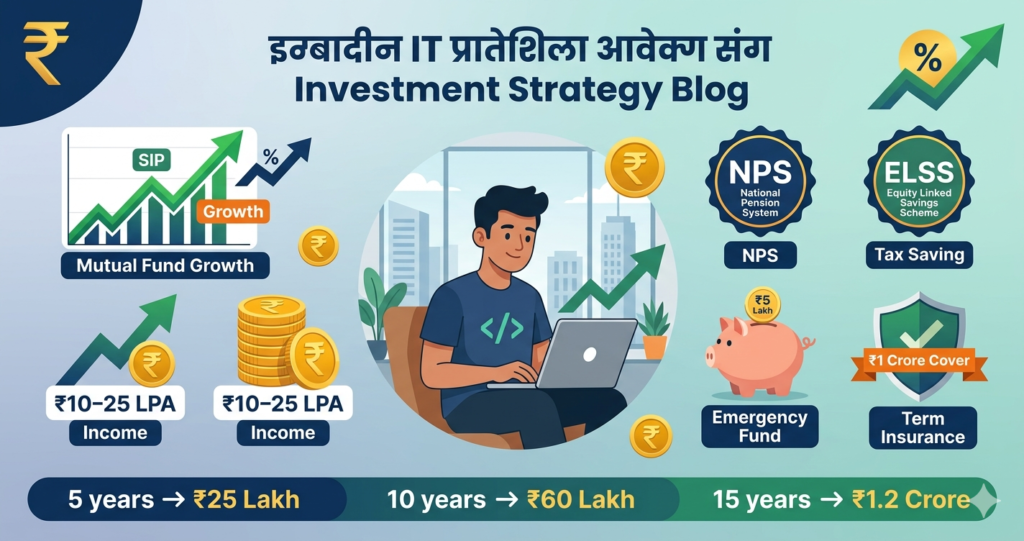
इस गाइड में हम बात करेंगे कि ₹10 से ₹25 LPA कमाने वाला IT professional अपनी income को कैसे strategic तरीके से invest करे — SIP, ELSS, NPS, Term Insurance, Emergency Fund, और Real Estate सब कुछ मिलाकर एक solid plan।
1. IT कर्मचारी की असली Financial Picture
IT sector में काम करना exciting है, लेकिन इसके साथ कुछ unique financial challenges भी आते हैं जो दूसरे sectors में नहीं होते:
- Job Insecurity: Layoffs, project cancellations, और restructuring — IT में यह reality है। 2023-24 में globally लाखों IT jobs गई।
- Lifestyle Inflation: सैलरी बढ़ती है तो खर्चे भी बढ़ते हैं — नया iPhone, weekend trips, premium subscriptions।
- Metro City खर्चे: Bangalore, Pune, Hyderabad में ₹25,000–50,000 rent आम बात है।
- Variable Income: Variable pay, bonus, और ESOPs — इनका सही plan नहीं होता।
- Career Breaks: Upskilling, sabbaticals, या family reasons से career breaks होते हैं।
₹20 LPA कमाने वाला IT employee अगर सही invest नहीं करता, तो 10 साल में वो उससे कम wealthy होगा जो ₹10 LPA पर systematic investment करता है। यही compounding का जादू और lifestyle inflation का खतरा है।
2. निवेश शुरू करने से पहले ये 3 काम ज़रूर करें
Investment शुरू करने से पहले एक strong financial foundation बनाना ज़रूरी है। बिना नींव के घर नहीं बनता।
Emergency Fund बनाएं
कम से कम 6 महीने के खर्चे Liquid Mutual Fund या High-Interest Savings Account में रखें। IT sector में job loss हो सकता है।
Term Insurance लें
अपनी annual income का 10–15x का Term Insurance लें। ₹20 LPA earner को ₹2–3 करोड़ का cover चाहिए। 30 साल की उम्र में premium बहुत कम होता है।
Health Insurance लें
कंपनी का group insurance काफी नहीं है। Job जाने पर coverage खत्म। अलग से ₹10–25 लाख का Health Cover लें। Super Top-Up plan consider करें।
Emergency Fund को Paytm Money या Zerodha Coin पर Liquid Fund में रखें। FD से ज़्यादा return और instantly withdraw होता है। ये step-1 है, इसके बिना investment शुरू मत करें।
3. 50-30-20 Rule — IT Salary के लिए सही Framework
बजट बनाने का सबसे आसान तरीका है 50-30-20 Rule, लेकिन IT professionals के लिए इसे थोड़ा modify करना होगा:
| Category | Classic Rule | IT Professional (Modified) | ₹15 LPA पर (Monthly ₹1.25L) |
|---|---|---|---|
| Needs (ज़रूरतें) | 50% | 45–50% | ₹56,000–63,000 |
| Wants (चाहतें) | 30% | 20–25% | ₹25,000–31,000 |
| Investment + Savings | 20% | 30–35% | ₹37,000–44,000 |
IT professionals को “Wants” को कम करके “Investment” ज़्यादा करना चाहिए। जितनी जल्दी शुरू करेंगे, उतना ज़्यादा compounding काम करेगा।
4. बेस्ट इन्वेस्टमेंट ऑप्शन्स — IT Employees के लिए
4.1 Equity Mutual Funds (SIP के ज़रिए)
Long-term wealth creation के लिए Equity Mutual Funds सबसे powerful tool है। SIP (Systematic Investment Plan) के ज़रिए हर महीने एक fixed amount invest होती है।
- Large Cap Funds: Stable growth, कम risk। Nifty 50 index fund एक बढ़िया option।
- Flexi Cap Funds: Fund manager across market caps invest करता है। ₹10 LPA earners के लिए best।
- Mid Cap Funds: Higher risk, higher return। ₹15 LPA+ earners के लिए portfolio का 20-30%।
- ELSS (Tax Saving Fund): 80C में ₹1.5 लाख तक tax benefit + equity returns। IT employees must-have।
SIP को salary के दिन ही schedule करें — जैसे ही salary आए, auto-debit हो जाए। “Pay Yourself First” का यही मतलब है। Step-Up SIP भी consider करें — हर साल 10-15% SIP बढ़ाएं।
4.2 NPS (National Pension System)
IT professionals के लिए NPS एक underrated powerhouse है:
- Section 80CCD(1B) में ₹50,000 extra tax deduction — 80C के ऊपर।
- Employer contribution पर भी tax benefit।
- Long-term compounding — 20-30 साल में बड़ा corpus बनता है।
- Equity exposure (Tier-I में E fund) से decent returns।
अगर आपकी company NPS में employer contribution offer करती है तो यह FREE money है — ज़रूर लें। HDFC Pension, SBI Pension जैसे NPS fund managers में account खोलें।
4.3 PPF (Public Provident Fund)
Safe और tax-free investment। Section 80C benefit + returns भी tax-free। लेकिन 15 साल lock-in है, इसलिए यह long-term goal के लिए है। ₹1.5 लाख per year maximum invest होता है। Risk-averse IT employees के लिए perfect debt component।
4.4 EPF (Employee Provident Fund)
कंपनी automatically काटती है, लेकिन VPF (Voluntary PF) के ज़रिए आप ज़्यादा contribute कर सकते हैं — interest rate बहुत अच्छा (8.15%) और tax-free भी। Retirement corpus का मज़बूत हिस्सा।
4.5 Direct Equity / Stocks
IT sector में काम करने वालों को technology companies की अच्छी समझ होती है — इस advantage को use करें। लेकिन portfolio का maximum 10–15% ही direct stocks में लगाएं। बाकी Mutual Funds में।
4.6 ESOPs (Employee Stock Option Plans)
अगर company ESOPs देती है तो यह wealth creation का बड़ा मौका है। लेकिन एक common mistake — सारी wealth एक company के stock में मत रखें। Vesting के बाद diversify करें।
5. Tax Saving Strategy — IT Employees के लिए
नए tax regime vs पुराने tax regime — यह decision बहुत important है। नए आयकर अधिनियम 2025 की पूरी जानकारी यहाँ पढ़ें।
| Deduction | Section | Maximum Amount | Suitable For |
|---|---|---|---|
| ELSS / PPF / EPF | 80C | ₹1,50,000 | सभी |
| NPS (Extra) | 80CCD(1B) | ₹50,000 | ₹12 LPA+ |
| Health Insurance Premium | 80D | ₹25,000+ | सभी |
| Home Loan Interest | 24(b) | ₹2,00,000 | Home Buyers |
| HRA Exemption | 10(13A) | Salary Based | Renters |
₹15 LPA earner अगर Old Regime में ELSS (₹1.5L) + NPS (₹50K) + Health Insurance (₹25K) + HRA claim करे तो easily ₹2.5–3 लाख tax बचा सकता है। एक CA या financial advisor से एक बार consult करें।
6. Salary-Wise Investment Allocation Plan
अब देखते हैं तीन अलग salary slabs के लिए practical allocation:
🟡 ₹10 LPA (Monthly In-Hand ≈ ₹70,000–75,000)
| Category | Monthly Amount | Annual |
|---|---|---|
| Rent + Bills + Groceries | ₹30,000–35,000 | ₹3.6–4.2L |
| Personal Expenses / Lifestyle | ₹12,000–15,000 | ₹1.4–1.8L |
| Emergency Fund (initially) | ₹8,000 | ₹96,000 |
| ELSS SIP (80C) | ₹8,000 | ₹96,000 |
| Index Fund / Flexi Cap SIP | ₹6,000 | ₹72,000 |
| Term Insurance Premium | ₹1,500 | ₹18,000 |
| NPS | ₹3,000 | ₹36,000 |
🟠 ₹15 LPA (Monthly In-Hand ≈ ₹1,00,000–1,10,000)
| Category | Monthly Amount | Annual |
|---|---|---|
| Rent + Bills + Groceries | ₹40,000–45,000 | ₹4.8–5.4L |
| Personal Expenses / Lifestyle | ₹18,000–20,000 | ₹2.2–2.4L |
| ELSS SIP (80C) | ₹12,500 | ₹1,50,000 |
| NPS Contribution | ₹4,200 | ₹50,000 |
| Flexi Cap / Mid Cap SIP | ₹12,000 | ₹1,44,000 |
| Index Fund SIP | ₹8,000 | ₹96,000 |
| Health + Term Insurance | ₹3,500 | ₹42,000 |
| PPF (optional) | ₹5,000 | ₹60,000 |
🔴 ₹25 LPA (Monthly In-Hand ≈ ₹1,60,000–1,75,000)
| Category | Monthly Amount | Annual |
|---|---|---|
| Rent / EMI + Expenses | ₹60,000–70,000 | ₹7.2–8.4L |
| Lifestyle | ₹25,000–30,000 | ₹3–3.6L |
| ELSS + NPS + PPF (80C + 80CCD) | ₹16,700 | ₹2,00,000 |
| Equity Mutual Funds (SIP) | ₹30,000 | ₹3,60,000 |
| Mid + Small Cap SIP | ₹15,000 | ₹1,80,000 |
| International Fund | ₹8,000 | ₹96,000 |
| Direct Stocks (optional) | ₹10,000 | ₹1,20,000 |
| Real Estate Down Payment | ₹15,000 | ₹1,80,000 |
7. Key Insights और Expert Tips
हर साल increment मिलने पर SIP उसी proportion में बढ़ाएं। अगर ₹5,000 SIP को हर साल 10% बढ़ाएं, तो 20 साल में corpus fixed SIP से 40–50% ज़्यादा होगा। Step-Up SIP calculator यहाँ देखें।
ESOPs vest होने के बाद तुरंत सब sell करके diversify मत करें — tax implications देखें। लेकिन company stock को total portfolio का 10–15% से ज़्यादा मत रखने दें।
Rupee depreciation से बचने के लिए portfolio का 10-15% US Index Funds या Global Funds में रखें। Motilal Oswal S&P 500 Index Fund जैसे options हैं।
साल में एक बार portfolio review करें। Goal-based investing करें — retirement, home, child education — हर goal के लिए अलग fund। Rebalancing ज़रूर करें।
Salary बढ़े तो lifestyle inflation रोकें। ₹10 से ₹20 LPA हो जाए, तो investment भी double करें — खर्चे नहीं। यही habit आपको बाकियों से 10 साल आगे रखेगी।
8. Real Case Study — रोहन की कहानी
📊 Case Study: रोहन शर्मा, 28 साल, Pune, ₹15 LPA
Background: रोहन एक mid-size IT company में software engineer है। 2021 में job join की ₹8 LPA पर, 2024 तक salary ₹15 LPA हो गई।
पहले क्या करता था: सारी salary spend हो जाती थी। Netflix, Zomato, weekends trips, नई gadgets। 3 साल में savings ₹0।
बदलाव के बाद (2024 से):
- Emergency Fund: ₹3 लाख Liquid Fund में बनाया ✅
- Term Insurance: ₹1.5 करोड़ का Cover, Premium ₹1,100/month ✅
- ELSS SIP: ₹12,500/month (80C भरने के लिए) ✅
- NPS: ₹4,200/month (extra ₹50K benefit) ✅
- Flexi Cap SIP: ₹8,000/month ✅
- Total Investment: ₹25,800/month ≈ ₹3.1 LPA
2034 में Expected Corpus (10 साल बाद @ 12% CAGR):
- ELSS: ₹12,500 × 10 साल ≈ ₹28–30 लाख
- Flexi Cap: ₹8,000 × 10 साल ≈ ₹18–20 लाख
- NPS: ₹50,400/year × 10 साल ≈ ₹10–12 लाख
- कुल corpus ≈ ₹56–62 लाख (बिना Step-Up के)
अगर रोहन हर साल 10% Step-Up करे तो 10 साल में corpus ₹80–90 लाख तक पहुँच सकता है।
9. Common Mistakes to Avoid
LIC Endowment या ULIP plans में पैसे मत डालें। Insurance = Term Plan। Investment = Mutual Fund। दोनों को mix मत करें।
Market गिरने पर SIP बंद करना सबसे बड़ी गलती है। Market down = sale on investments। इसी समय खरीदना फायदेमंद होता है।
Home loan लेकर Flat खरीदना emotional decision होता है। Real estate illiquid है, returns अनिश्चित। पहले strong equity portfolio बनाएं, फिर real estate consider करें।
F&O और Crypto highly speculative हैं। SEBI के data के अनुसार 90%+ retail F&O traders पैसे गँवाते हैं। इन्हें total portfolio के 5% से ज़्यादा मत दें।
Emergency Fund को SIP में मत लगाएं। यह अलग रखना है — Liquid Fund या Savings Account में — क्योंकि job loss की situation में तुरंत ज़रूरत पड़ सकती है।
📚 VittGyan पर और पढ़ें:
🔗 Trusted External Resources:
10. FAQs — IT Employees के सबसे Common सवाल
11. Conclusion — अभी शुरू करें, बाद में नहीं
IT sector में काम करना एक privilege है — लेकिन high salary होने से automatically wealth नहीं बनती। Wealth बनती है discipline, consistency, और smart planning से।
आज से ही ये 5 steps लें:
- Emergency Fund बनाएं — 6 महीने के खर्चे Liquid Fund में
- Term + Health Insurance — ज़िंदगी और सेहत की security पहले
- SIP शुरू करें — ELSS से शुरुआत करें, tax benefit भी मिलेगा
- NPS में contribute करें — extra ₹50,000 tax benefit पाएं
- हर साल Step-Up करें — increment मिले तो SIP भी बढ़ाएं
याद रखें — “The best time to invest was yesterday. The second best time is today.” Compounding उन्हीं के लिए काम करती है जो जल्दी शुरू करते हैं और consistent रहते हैं।

Prasad Govenkar is a seasoned Enterprise Architect and personal finance educator with 24+ years of industry experience. Having worked extensively on financial and telecom systems, he brings a unique blend of technical expertise and practical financial understanding.
Through his blogs, he simplifies complex topics like investing, retirement planning, taxation, and wealth building for everyday readers. His content focuses on clarity, real-world applicability, and long-term financial discipline.
Leave a Reply